




The Tug-of-War at the Heart of Photography
Imagine standing in front of two photographs. One is breathtaking—perfect light, elegant composition, the kind of image that makes you stop scrolling or pause in a gallery. The other is grainy, awkwardly framed, maybe even technically flawed. Yet it hits you in the chest. It says something. You’re not sure what, but it lingers. Which one matters more?
This tension—between beauty and meaning—sits at the very heart of photography. It’s not a new debate, but it’s one that feels especially pressing today. We live in an age of visual saturation, where billions of images are produced and consumed daily. Some are designed to dazzle, others to document, and many fall somewhere in between. The question of what we actually value in a photograph—its surface appeal or its deeper resonance—has never been more relevant.
Beauty in photography is immediate. It doesn’t need explanation. A well-balanced composition, a shaft of golden light, a colour harmony that feels almost musical—these are things we respond to instinctively. They please the eye, and often the heart. Meaning, by contrast, asks more of us. It requires context, reflection, sometimes even discomfort. It can be subtle or blunt, personal or political, but it rarely arrives fully formed in a single glance. Meaning unfolds.
Photographers, critics, and audiences have wrestled with this tension for as long as cameras have existed. Early practitioners debated whether photography should aspire to the beauty of painting or embrace its documentary power. Later generations argued over whether technical perfection was a virtue or a distraction. Today, the conversation continues in galleries, competitions, and online feeds, where beauty and meaning jostle for attention in different ways.
The stakes are not trivial. Beauty can seduce us into overlooking substance. Meaning can weigh down an image until it feels more like a lecture than a photograph. Yet both have undeniable power. Beauty can uplift, inspire, and connect across cultures. Meaning can provoke, challenge, and bear witness. The real question is not whether one is better than the other, but how they interact—and how we, as viewers, respond.
This essay doesn’t aim to settle the debate. Instead, it will explore both sides: what beauty offers, what meaning demands, and how the two sometimes collide or converge. Along the way, we’ll look at examples from history and contemporary practice, consider how audiences and markets shape our values, and reflect on the philosophical undercurrents that run beneath the surface. The goal is not to deliver a verdict, but to leave you with a richer sense of the question—and perhaps a new way of looking.
Because in the end, photography is not just about what’s in the frame. It’s about what happens when we look. And whether we’re drawn first to beauty or to meaning, the act of looking itself may be the most important thing of all.
The Case for Beauty
Let’s begin with the obvious: human beings are drawn to beauty. Always have been. Always will be. Whether it’s a sunset, a face, or a perfectly balanced still life, beauty has a way of stopping us in our tracks. It’s immediate. It doesn’t need translation. And in photography, where the image arrives all at once—no page-turning, no unfolding narrative—beauty can be a powerful hook.
Beauty as Instinct
Psychologists often point out that our brains are wired to respond to certain visual cues. Symmetry, balance, and harmony are pleasing because they suggest health, order, and stability. Light and colour affect our emotions directly: warm tones can soothe, cool tones can unsettle, high contrast can energise. A photograph that harnesses these elements doesn’t just look good—it feels good. It taps into something primal.
Historical Traditions
The pictorialists of the late 19th and early 20th centuries deliberately mimicked painting, using soft focus and careful composition to elevate photography to the status of fine art. Their work was criticised by some as overly sentimental, but it established beauty as a legitimate pursuit in photography. Later, modernists like Edward Weston and Ansel Adams brought a sharper, more precise kind of beauty—clean lines, crisp detail, tonal mastery. Their landscapes and still lifes remain iconic, not just for what they show but for how they show it.
Contemporary Practice
Fast forward to today, and beauty is everywhere. Social media platforms reward images that are instantly striking: golden-hour portraits, minimalist interiors, saturated travel shots. Competitions often favour technically polished work. Even in documentary photography, beauty plays a role—Sebastião Salgado’s images of suffering and displacement are rendered with such visual grandeur that they provoke debate about whether beauty risks aestheticising pain.
Accessibility and Universality
There’s a democratic quality to beauty. You don’t need a degree in art history to appreciate a beautiful photograph. It’s accessible. It invites people in. And in a world where photography is everywhere—on our phones, our feeds, our walls—that accessibility matters. Beauty can be a gateway, a way of drawing viewers into conversations they might otherwise avoid.
The Emotional Dimension
Beauty isn’t just about surface. It can carry emotional weight. A beautiful image can soothe, uplift, or inspire. It can offer a moment of stillness in a noisy world. It can remind us of what’s worth preserving. In this sense, beauty isn’t shallow—it’s restorative. It can be a form of care, both for the subject and for the viewer.
Critiques of Beauty
Still, beauty has its critics. Some argue that it can distract from substance, that it risks becoming decorative or superficial. Susan Sontag warned that beauty can seduce us into forgetting the realities an image represents (On Photography[paid link], 1977). Others suggest that beauty can be manipulative, engineered to please rather than to provoke. In the age of filters and algorithms, this concern feels especially relevant. Is beauty being reduced to a formula?
Beauty as a Gateway
Yet many photographers argue the opposite—that beauty is a way in. That it opens the door to deeper engagement. That it earns the viewer’s attention, and then rewards it. In this view, beauty isn’t a substitute for meaning—it’s a delivery system. A photograph that is both beautiful and thoughtful can reach audiences who might otherwise turn away.
The Honest and the Engineered
Of course, not all beauty is created equal. There’s a difference between an image that’s beautiful because it’s well seen, and one that’s beautiful because it’s been over-processed, over-styled, or algorithmically engineered to please. The former feels earned. The latter, manipulative. The challenge for photographers is to recognise the difference, and for audiences to remain alert to it.
Final Thoughts on the Case for Beauty
Beauty in photography is powerful, but it’s not neutral. It can elevate or obscure. It can invite or seduce. It can be honest or dishonest. And like all powerful tools, it depends on how it’s used. The case for beauty is strong, but it’s not simple. It asks us to consider not just what we see, but how we see—and why we respond the way we do.
The Case for Meaning
If beauty is what draws us in, meaning is what makes us stay. It’s the thing that lingers after the initial impression fades—the story, the question, the feeling that something matters. Meaning gives a photograph weight. It’s what turns an image from decoration into communication, from surface into substance.

Defining Meaning
But what do we mean by “meaning”? It’s a slippery word. In photography, meaning might refer to narrative—what’s happening in the frame, or just outside it. It might be symbolic—what the image stands for, culturally or emotionally. It might be political, historical, personal. Sometimes it’s all of these at once. Sometimes it’s none of them, and the meaning is simply what the viewer brings. Unlike beauty, which tends to be more universal, meaning is often contextual, layered, and contested.
Documentary and Witness
There’s a long tradition of valuing meaning in photography. Think of the great documentary photographers—Dorothea Lange, Gordon Parks, Don McCullin—whose images didn’t just show the world, but said something about it. Lange’s Migrant Mother (1936) is not only a striking portrait but a symbol of Depression-era hardship. McCullin’s war photography confronts us with the human cost of conflict. These images are not designed to be beautiful, though some are. Their power lies in their ability to bear witness, to insist that we look and remember.
Conceptual and Artistic Meaning
Meaning also thrives in conceptual photography. Cindy Sherman’s staged self-portraits interrogate identity and representation. Sophie Calle’s projects blur the line between art and life, raising questions about intimacy, surveillance, and narrative. These works often resist beauty in the conventional sense. They are provocative, unsettling, sometimes even banal. But they are rich with meaning, inviting viewers to think rather than simply admire.
Context and Interpretation
Meaning can also emerge from context. A photograph of an empty chair might seem banal—until you learn it belonged to someone who never came home. A blurry snapshot might seem amateurish—until you realise it was taken in a moment of crisis. In these cases, the image’s power doesn’t lie in how it looks, but in what it represents. Meaning is often invisible until it’s explained, and yet once revealed, it transforms the image entirely.
Truth and Honesty
There’s a kind of honesty in this. Life isn’t always beautiful. It’s messy, awkward, unresolved. Photographs that reflect that can feel more truthful than those that smooth the edges. They remind us that photography isn’t just about seeing—it’s about understanding. Susan Sontag argued that photographs are not just records but interpretations, and that meaning often lies in what they choose to show or omit (On Photography[paid link], 1977).
Pitfalls of Meaning
But meaning has its pitfalls too. It can be heavy-handed. Didactic. Over-explained. There’s a risk that in trying to say something important, a photograph forgets to be a photograph. It becomes a caption in search of an image. And for some viewers, that can feel like homework. Meaning can also be inaccessible. Not everyone has the same cultural references, the same visual literacy. A photograph that’s rich with meaning for one person might be opaque to another. In a globalised world, this matters.
The Photographer’s Purpose
Still, many photographers argue that meaning is what gives their work purpose. That without it, they’re just making pretty pictures. That photography, at its best, is a way of thinking—a way of engaging with the world, not just recording it. Meaning can be subtle or loud, personal or collective, but it’s often the reason photographers keep pressing the shutter.
The Whisper and the Shout
And perhaps that’s the key. Meaning doesn’t have to be loud. It doesn’t have to be obvious. Sometimes it’s a whisper, not a shout. A quiet suggestion. A question left hanging. But when it’s there, it changes everything. A photograph with meaning asks us not just to look, but to think, to feel, to respond.
When the Two Align
Every now and then, a photograph comes along that seems to have it all. It’s beautiful—undeniably so—but it also carries weight. It says something. It moves us. These are the images that tend to endure. They’re the ones that end up on gallery walls, in history books, or etched into our collective memory.
Iconic Examples
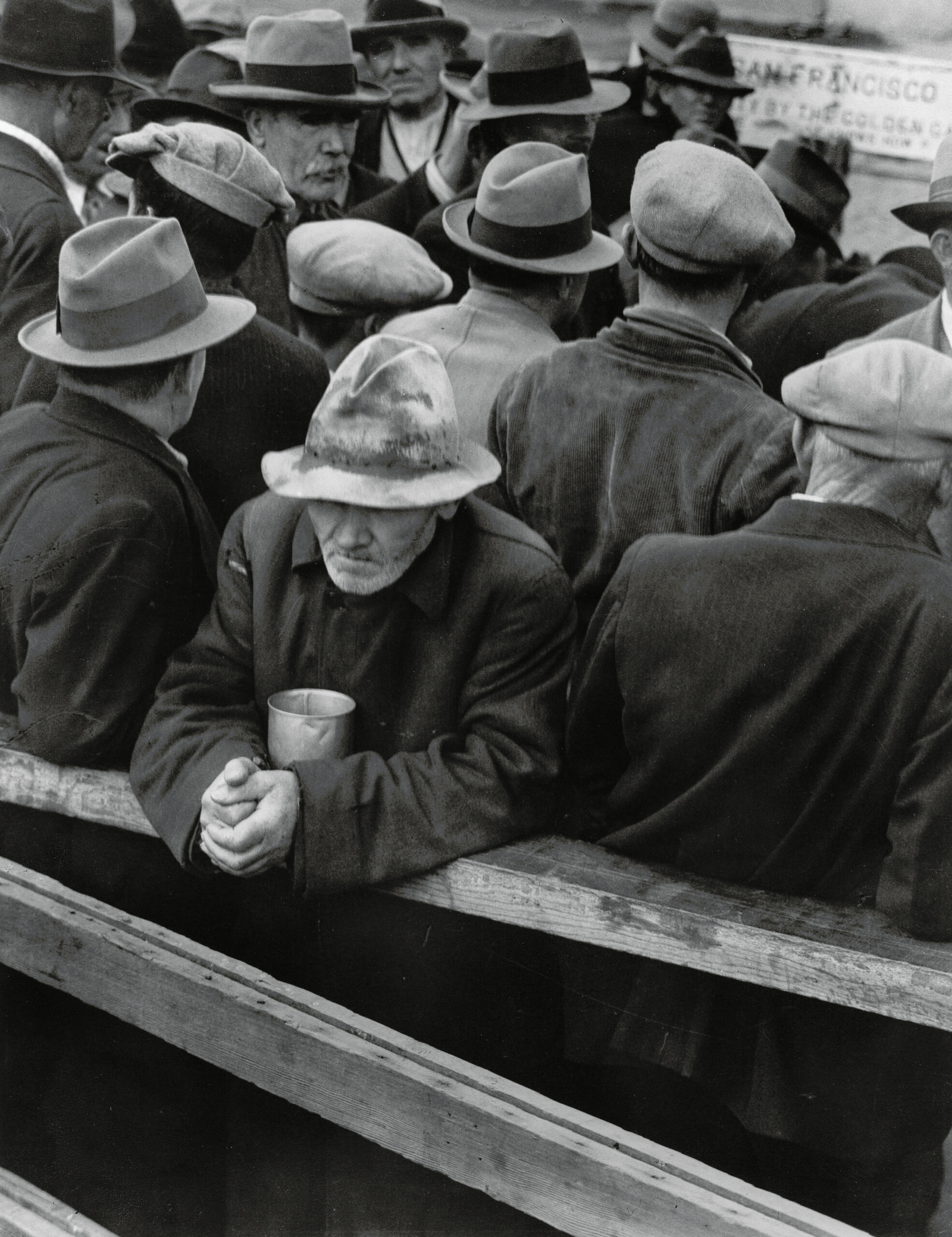
Take White Angel Breadline by Dorothea Lange. A lone man stands with bowed head among a crowd waiting for food in Depression‑era San Francisco. The photograph is visually arresting—its stark contrasts and careful framing heighten the sense of isolation—yet it also tells a story of economic despair and human dignity. Or Steve McCurry’s Afghan Girl[paid link]—those piercing green eyes, the vivid colours, the perfect framing. It’s visually arresting, but it also tells a story of displacement, conflict, and human dignity. These photographs endure not just because they are beautiful, and not just because they are meaningful, but because they are both.
The Amplifying Effect
When beauty and meaning align, the result can be electric. Beauty draws us in, meaning holds us there. The image becomes more than the sum of its parts. It resonates across audiences, cultures, and generations. A photograph that is both beautiful and meaningful can cross boundaries—between art and journalism, between personal and political, between the eye and the heart.
Accidental Alignments
This alignment isn’t always intentional. Sometimes a photographer sets out to make something beautiful and stumbles into meaning. Other times, they’re chasing meaning and find beauty along the way. The best images often come from this tension—when the photographer is alert to both form and content, both surface and depth. Henri Cartier-Bresson’s “decisive moment” philosophy captures this: beauty in timing, meaning in context.
The Risk of Manipulation
But alignment can also be dangerous. When beauty and meaning are too neatly fused, the image can feel manipulative. Too perfect. Too polished. It can start to resemble propaganda, or sentimentality. The viewer might feel they’re being told what to feel, rather than invited to feel it. This is particularly evident in photojournalism, where the line between aesthetic power and ethical responsibility is thin. A beautifully composed image of suffering can raise awareness, but it can also risk aestheticising pain.
The Balance of Power
Still, when it works, it works. These are the images that cross boundaries and endure. They remind us that beauty and meaning are not enemies, but potential allies. The challenge is balance: beauty should not overwhelm meaning, and meaning should not strip beauty of its power. The most memorable photographs are those that manage to hold both in tension, allowing viewers to experience the image on multiple levels.
Audience Matters: Who’s Looking, and Why?
A photograph doesn’t exist in a vacuum. It’s always seen by someone, somewhere, and that context shapes what it means. The same image can be admired in a gallery, skimmed past on Instagram, or dissected in a classroom—and each audience brings its own expectations, biases, and ways of valuing what they see.
Curators and Critics
Curators and critics often look for depth. They want to see how an image fits into a tradition, how it challenges or extends what came before. Beauty might be appreciated, but meaning tends to carry more weight in these circles. A photograph that provokes thought or sparks debate is more likely to be remembered. For critics, beauty without meaning risks being dismissed as decorative, while meaning without beauty risks being labelled clumsy. The balance matters, but the emphasis is often on intellectual engagement.
The General Public
The general public, on the other hand, often responds to immediacy. A striking image—whether beautiful or shocking—grabs attention. Social media amplifies this: the images that spread are the ones that stop the scroll. Beauty is rewarded with likes, while meaning sometimes struggles to compete unless it’s tied to a powerful story. Yet public audiences are not monolithic. Some are drawn to beauty for its comfort, others to meaning for its relevance. The diversity of responses reflects the diversity of viewers themselves.
Specialist Audiences
Then there are specialist audiences—historians, activists, artists—who bring their own lenses. For them, meaning might be paramount. A technically flawed image can still be invaluable if it documents something significant. Conversely, a technically perfect but empty image may be dismissed as hollow. For activists, a photograph’s ability to mobilise matters more than its aesthetic qualities. For artists, the interplay of beauty and meaning may be judged against broader conceptual frameworks.
Cultural Contexts
Cultural background also plays a role. What looks beautiful in one tradition might seem ordinary in another. What carries meaning in one context might be lost in translation elsewhere. A photograph of a landscape may be seen as sublime in one culture, but as mundane in another. A gesture or symbol may resonate deeply in one place, but be invisible in another. Photography is global, but audiences are local, and that tension matters. It reminds us that beauty and meaning are not universal—they are culturally negotiated.
The Role of Platforms
The platform through which a photograph is seen also shapes its reception. In a gallery, viewers may linger, reflect, and read accompanying texts. On social media, the same image may be consumed in seconds, stripped of context, and judged primarily on its visual impact. In print, meaning may be reinforced by captions and articles. Online, meaning may be drowned out by competing images. The medium shapes the message, and the audience’s response shifts accordingly.
Audience Agency
Ultimately, the value of a photograph depends not just on what it is, but on who’s looking. Beauty and meaning aren’t fixed qualities—they’re negotiated between image and audience. A photograph may be beautiful to one viewer, meaningful to another, and irrelevant to a third. This negotiation is part of what makes photography so endlessly fascinating. It’s not just about what the photographer intended, but about how audiences interpret, adapt, and repurpose the image.
The Artist’s Dilemma
For photographers themselves, the tension between beauty and meaning isn’t just theoretical—it’s practical. Every time they lift the camera, they’re making choices. Do they frame for elegance, or for clarity? Do they chase the light, or chase the story? And sometimes, those choices pull in opposite directions.
The Pressure of Expectation
Many artists feel the pressure of audience expectation. A gallery might prefer work that’s conceptually rich, while a commercial client wants something polished and pleasing. Social media rewards instant visual appeal, but a long-term project may demand patience and depth. Navigating these demands can feel like walking a tightrope, with beauty on one side and meaning on the other. The dilemma is not abstract—it’s embedded in the daily practice of making and sharing images.
Editing as a Battleground
Editing is where the dilemma often sharpens. Cropping can heighten beauty by simplifying composition, but it can also strip away context that carries meaning. Retouching might make an image more striking, but at the cost of honesty. Even sequencing—how images are presented together—can tilt the balance one way or the other. A series arranged for maximum aesthetic impact may lose narrative coherence, while a sequence designed for meaning may sacrifice visual rhythm. The artist must decide which compromise feels truer to their intent.
Historical Echoes
This dilemma is not new. The pictorialists sought beauty, often at the expense of documentary truth. The straight photographers of the early 20th century pushed back, insisting on clarity and honesty. Later, photojournalists wrestled with how to make images that were both visually compelling and ethically responsible. The artist’s dilemma has always been part of photography’s DNA, shaping its evolution across generations.
Intention and Identity
There’s also the question of intention. Some photographers set out to make beautiful images, believing that beauty itself is a form of truth. Others prioritise meaning, seeing beauty as a distraction. Most, though, find themselves somewhere in between—trying to honour both, knowing that compromise is inevitable. And then there’s the personal dimension. Photographers are not machines. They bring their own values, biases, and emotions to the work. What feels beautiful to one may feel empty to another. What feels meaningful to one may feel contrived to another. The dilemma is not just about craft—it’s about identity.
Contemporary Challenges
In the digital age, the dilemma has intensified. Filters and editing software make beauty easier to manufacture, while the flood of images online makes meaning harder to sustain. Photographers must decide whether to play the algorithm’s game—optimising for beauty that grabs attention—or to risk obscurity by pursuing meaning that requires time and reflection. The artist’s dilemma is now entangled with technology, commerce, and visibility.
Negotiation, Not Resolution
In the end, the artist’s dilemma is less about choosing between beauty and meaning, and more about deciding how to balance them. Each photograph is a negotiation, a weighing of priorities. And that negotiation is part of what makes photography an art, not just a technique. The dilemma is not a problem to be solved, but a condition to be lived with—a reminder that every image is both an aesthetic object and a communicative act.
The Market and the Machine
Photography doesn’t just live in the realm of artists and audiences—it’s also shaped by markets and, increasingly, by algorithms. What gets rewarded, circulated, and sold often depends less on the photograph itself than on the systems around it. Beauty and meaning are both affected, but not always equally.
Commercial Forces
Commercial photography has long favoured beauty. Advertising, fashion, product photography—all rely on images that are polished, pleasing, and aspirational. Beauty sells. It reassures. It persuades. Meaning, unless it aligns neatly with the brand message, tends to be secondary. A photograph that’s too ambiguous or challenging rarely makes it into a glossy campaign. The market rewards clarity and allure, not complexity.
Competitions and Galleries
Competitions and galleries often try to balance the two. Judges may reward technical excellence, but they also look for work that says something beyond the surface. Yet even here, trends emerge. Some years, the winning images lean towards striking aesthetics; other years, towards hard-hitting narratives. The market has fashions, just like any other. Photographers quickly learn to read these currents, adjusting their submissions accordingly. Beauty and meaning become strategic choices, not just artistic ones.
The Algorithmic Machine
And then there’s the machine—the algorithms that govern what we see online. Platforms like Instagram and TikTok reward images that grab attention quickly. Bright colours, symmetry, faces, sunsets—these are the visual tropes that rise to the top. Meaning, unless it’s packaged in a way that’s instantly legible, often struggles to compete. The machine doesn’t care about depth. It cares about engagement. A photograph that is beautiful but empty may thrive, while one that is meaningful but subtle may vanish into obscurity.
The Feedback Loop
This creates a feedback loop. Photographers learn what the machine rewards, and they adapt. Audiences learn what the machine shows, and they adjust their expectations. Beauty becomes the default currency, while meaning risks becoming niche. The danger is that we start to equate visibility with value, forgetting that the most important images are not always the most popular.
Resistance and Subversion
Yet the machine is not all-powerful. Some photographers use beauty as bait, smuggling meaning into the feed. Others deliberately resist, creating work that refuses to conform to algorithmic aesthetics. Galleries and independent platforms continue to champion images that challenge rather than please. The market and the machine shape photography, but they don’t dictate it entirely. There is room for resistance, and for innovation.
The Artist’s Negotiation
For photographers, this means another layer of negotiation—between their own values, their audience’s expectations, and the demands of systems that reward certain kinds of images over others. The market and the machine don’t just influence what gets seen; they influence what gets made. And that influence is one of the defining challenges of photography today.
Philosophical Undercurrents
Behind every debate about beauty and meaning in photography lies a deeper set of questions—about art, truth, and the act of looking itself. Philosophers and critics have been circling these issues for decades, and their ideas still shape how we think about images today. Photography, after all, is not just a technical process; it’s a way of seeing, and with that comes philosophy.
Beauty and Seduction
Susan Sontag, in On Photography[paid link] (1977), argued that photographs are not just records but interpretations. For her, beauty could seduce us into forgetting the realities an image represents, while meaning could remind us of photography’s moral weight. Beauty, in this view, risks becoming a distraction—a surface gloss that obscures the truth. Yet Sontag also acknowledged that beauty is part of what makes photographs compelling. Without it, they might fail to capture attention at all.
The Studium and the Punctum
Roland Barthes, in Camera Lucida[paid link] (1980), distinguished between the studium (the general cultural interest of a photo) and the punctum (the detail that pierces us personally). Beauty often lives in the studium—the composition, the harmony, the cultural codes we recognise. Meaning often strikes through the punctum—the unexpected detail that wounds, surprises, or resonates. Barthes reminds us that photographs operate on multiple levels, and that beauty and meaning may be experienced differently depending on the viewer.
Ways of Seeing
John Berger, in Ways of Seeing[paid link] (1972), suggested that images are never neutral—they’re always shaped by context, power, and ideology. A beautiful photograph might reinforce certain values, while a meaningful one might challenge them. Berger’s point is that what we value in a photograph says as much about us as it does about the image. Beauty and meaning are not inherent qualities; they are relational, shaped by culture, politics, and history.
Truth, Representation, and Ambiguity
Philosophical debates about photography often circle around truth. Is a photograph a slice of reality, or a constructed representation? Beauty complicates this question by aestheticising reality, while meaning complicates it by interpreting reality. The ambiguity of photography—its ability to be both document and art—makes it fertile ground for philosophical reflection. Walter Benjamin, for instance, saw photography as democratising art, but also as destabilising aura—the unique presence of the original. Beauty and meaning both shift under this lens.
The Intertwined Forces
These thinkers remind us that beauty and meaning aren’t opposites so much as intertwined forces. Beauty can heighten meaning, making it more accessible. Meaning can deepen beauty, giving it resonance beyond the surface. But both can also distort—beauty can prettify suffering, meaning can overburden an image with theory. The philosophical undercurrent is that photography is never simple. It is always both aesthetic and ethical, both surface and depth.
The Act of Looking
Philosophically, the question becomes: should we seek beauty, meaning, or simply experience? Perhaps the act of looking itself is the point. Photography doesn’t just show us the world—it shapes how we see it. And in that shaping, beauty and meaning are inseparable, even when they seem to be at odds. To look at a photograph is to enter into a dialogue between eye and mind, surface and depth, pleasure and thought.
Looking Again, Looking Differently
By now, we’ve circled beauty and meaning from every angle—admired their strengths, acknowledged their flaws, and seen how they sometimes collide. But before we close, it’s worth pausing to consider how we, as viewers, actually engage with photographs in practice. Do we rush past them, chasing the next burst of colour or drama? Or do we linger, letting the image unfold slowly?
The First Glance
Looking once is often about beauty. The first glance catches the surface—the light, the symmetry, the pleasing composition. It’s instinctive, almost automatic. Our eyes are trained to respond to visual cues quickly, and beauty delivers that instant reward. In a world of endless scrolling, this first glance often decides whether an image survives or vanishes.
The Second Glance
Looking again is where meaning emerges. The second glance might reveal something else: a detail, a tension, a question. A shadow in the corner, a gesture half-hidden, a context implied but not explained. These are the elements that don’t announce themselves immediately, but reward patience. Photography, unlike cinema or literature, doesn’t unfold in time—but it can unfold in attention. Meaning often requires us to slow down.
The Practice of Attention
This isn’t about choosing sides. It’s about recognising that our habits of looking shape what we value. If we only skim, beauty will dominate. If we slow down, meaning has a chance to speak. And sometimes, the act of looking again transforms beauty into meaning, or meaning into beauty. A photograph that seemed merely decorative may reveal a deeper resonance. An image that seemed purely functional may reveal unexpected elegance.
Examples of Transformation

Consider Walker Evans’s photographs of Depression-era America. At first glance, they may seem stark, even plain. But with time, their compositional precision and quiet dignity emerge. Beauty and meaning intertwine through repeated looking. Or think of Nan Goldin’s intimate snapshots. They may appear chaotic or raw, but the more we look, the more their emotional truth and fragile beauty come into focus. Looking again changes the photograph, and changes us.
The Challenge of Speed
The difficulty, of course, is that our culture doesn’t encourage second glances. Social media thrives on immediacy. News cycles demand speed. Even galleries, with their crowded walls and busy visitors, can foster skimming rather than lingering. To look again is to resist this pace, to reclaim time for attention. It’s a small act of defiance, but one that can transform our relationship with images.
Cultivating Different Ways of Seeing
So perhaps the challenge isn’t to decide whether beauty or meaning matters more, but to cultivate the kind of attention that allows both to coexist. To resist the easy scroll, and to give photographs the time they deserve. To look differently—not just with the eye, but with the mind, the memory, the imagination. Because in the end, what we value in a photograph may depend less on the image itself than on how we choose to look.
Closing Thoughts
We began with two photographs—one beautiful, one meaningful—and asked what we actually value when we look. Along the way, we’ve seen how beauty can captivate, how meaning can resonate, and how the two sometimes align in ways that feel unforgettable. We’ve also seen how audiences, artists, markets, and philosophies each tilt the balance differently, shaping what photography becomes in practice.
No Neat Resolution
There isn’t a neat answer. Beauty without meaning risks decoration; meaning without beauty risks didacticism. Yet both have their place, and both can be powerful. The tension between them is not a flaw but a feature. It keeps photography alive, dynamic, and contested. If we ever resolved the debate, photography might lose some of its richness. Ambiguity is part of its strength.
The Value of the Question
Perhaps the real challenge is not to choose between beauty and meaning, but to remain attentive—to look again, to look differently, to allow photographs the space to be more than one thing at once. The question itself—what do we value in a photograph?—is more important than any single answer. It forces us to reflect not just on images, but on ourselves: our habits of looking, our cultural assumptions, our ethical responsibilities.
Photography as Dialogue
Photography is not just about what’s in the frame. It’s about what happens when we look. Beauty invites us in; meaning asks us to stay. Together, they create a dialogue between eye and mind, surface and depth, pleasure and thought. That dialogue is what makes photography more than a technique—it makes it an art, and a way of thinking.
A Final Provocation
So the next time an image stops you, ask yourself: is it the beauty that holds me, or the meaning? Or is it something in the tension between the two? That question, more than any conclusion, may be the most valuable thing photography has to offer. Because in the end, photographs don’t just show us the world—they show us how we see it. And how we choose to look will always matter.

One Comment
I’m curious—when you look at a photograph, do you find yourself valuing its beauty first, or are you more drawn to the story or meaning behind it? For me, it often depends on my mood, but I wonder which resonates more with you, and why?