


Where Portrait Becomes Story
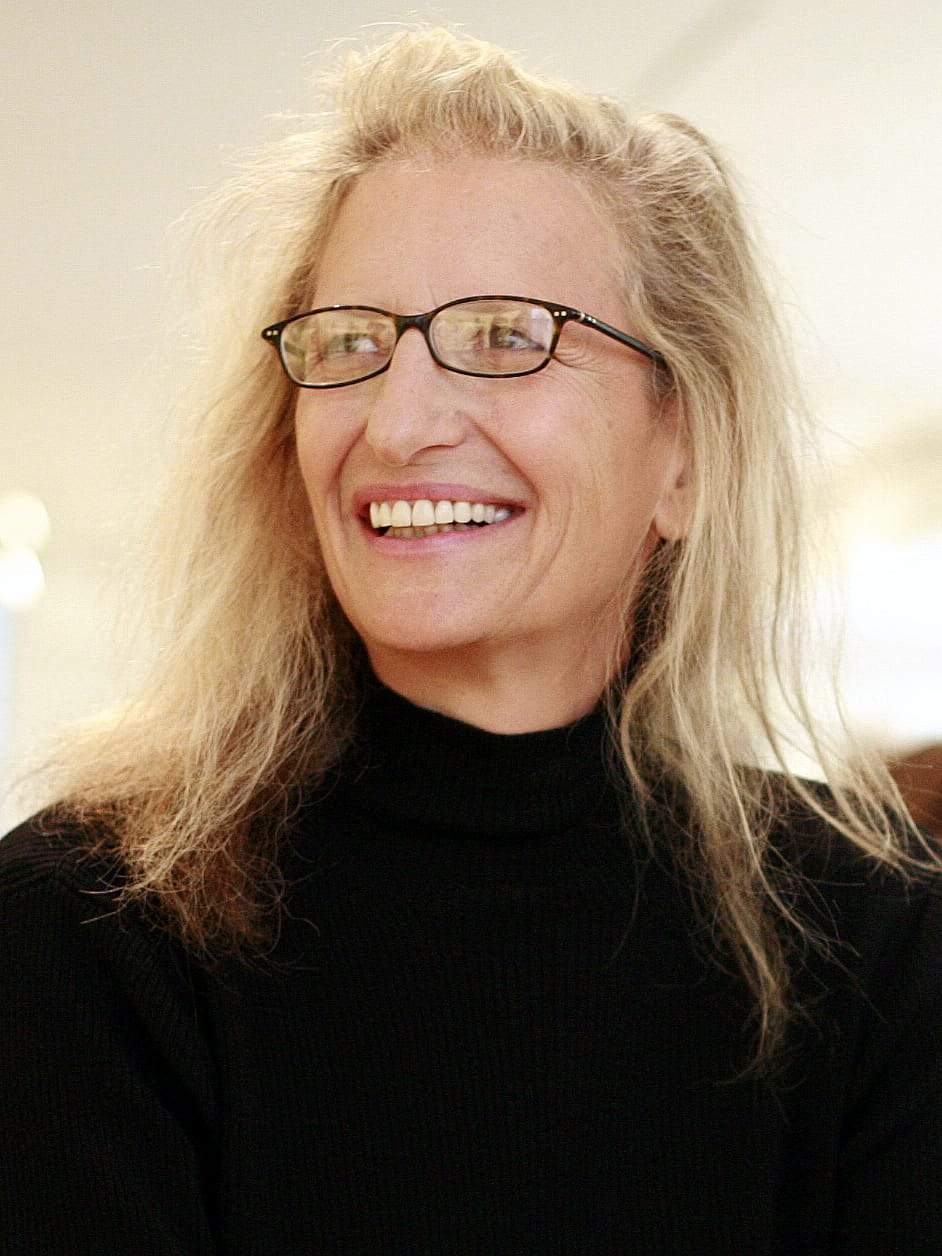
When you think of iconic celebrity portraits, one name invariably shines through: Annie Leibovitz. With her unparalleled ability to capture the essence of her subjects, Leibovitz has defined the visual language of fame for decades. Her work is a masterclass in storytelling, where every crisp, beautifully lit photograph reveals a narrative far beyond a simple likeness. Few photographers have managed to shape not only how we see celebrities, but also how celebrities see themselves.
The Art of the Portrait: More Than Just a Picture
Leibovitz’s genius lies in her collaborative approach. She doesn’t just photograph celebrities; she works with them to create a scene, a mood, or a fleeting, authentic moment. Her most famous portrait, featuring John Lennon curled naked around a fully clothed Yoko Ono just hours before his tragic death, is a poignant testament to this. It’s more than a cover for Rolling Stone; it’s a heartbreakingly intimate farewell that has etched itself into our collective cultural memory. This ability to fuse drama with vulnerability, and quirkiness with profound depth, is what makes her photography so compelling and enduring.
From Rolling Stone to Vanity Fair
Leibovitz began her career in the early 1970s as a staff photographer for Rolling Stone, where her raw, candid style quickly set her apart. She became the magazine’s chief photographer at just 23, chronicling the counterculture and rock-and-roll icons of the era. Her portraits of Mick Jagger on tour, or Hunter S. Thompson in his element, captured not just faces but entire cultural movements.
By the 1980s, she had transitioned to Vanity Fair, where her work took on a more theatrical, meticulously staged quality. Here, she developed the elaborate, cinematic style that would become her signature. Whether it was Whoopi Goldberg submerged in a bathtub of milk, or Demi Moore’s groundbreaking nude pregnancy portrait, Leibovitz consistently pushed the boundaries of what a celebrity portrait could be.
A Language of Light and Symbolism
What sets Leibovitz apart is her ability to use light, composition, and symbolism to tell layered stories. Her images often blur the line between portraiture and performance, inviting viewers to consider not just the person in front of the lens, but the cultural myths surrounding them. She has photographed everyone from Queen Elizabeth II to Serena Williams, from Hollywood royalty to political figures, always with the same blend of intimacy and grandeur.
Her portraits are rarely neutral. They are charged with meaning—sometimes playful, sometimes provocative, always deliberate. In this sense, Leibovitz is less a documentarian and more a visual dramatist, staging moments that feel both timeless and immediate.
The Power of a Photograph on Your Wall

Great photography has the power to transform a space, inviting conversation and inspiring emotion every single day. While Leibovitz’s original works are museum pieces, the principle of owning impactful art is accessible to everyone. A striking photograph can become the centrepiece of a room, a source of daily inspiration, and a reflection of your personal taste.
I believe in the power of art to elevate our everyday surroundings. In my own collection, I explore different themes with a similar dedication to technical precision and emotional resonance. For instance, if you are drawn to the clean lines and dramatic interplay of light and form found in Leibovitz’s studio work, you might find a connection with my curated Architecture series. This collection celebrates the quiet poetry of the built environment, transforming structures into contemplative artworks for your home.
Finding Your Own Iconic Piece
Whether you are a long-time admirer of portrait photography or looking to discover a new artistic centrepiece for your home, investing in a quality print is a rewarding experience. Consider what moves you:
- Storytelling: Does the image tell a story or evoke a strong feeling?
- Composition: Are you drawn to bold, dramatic lines or more subtle, intimate moments?
- Technical Excellence: Look for the crisp detail and masterful lighting that separates a snapshot from a work of art.
Legacy and Influence
Over the decades, Annie Leibovitz has become more than a photographer; she is a cultural historian with a camera. Her work has been exhibited in major museums, published in lavish monographs, and studied as much for its artistry as for its commentary on fame, power, and identity. She has received countless honours, including being named a Living Legend by the Library of Congress.
Yet perhaps her greatest legacy is the way she has redefined the portrait itself. For Leibovitz, a photograph is never just a likeness—it is a story, a performance, a mirror held up to both subject and viewer. In an age saturated with images, her photographs endure because they are not disposable snapshots but carefully constructed narratives that continue to resonate.
The Enduring Power of the Image
Annie Leibovitz’s portraits remind us that photography, at its best, is not about freezing time but about distilling truth. Whether that truth is raw and unguarded, or theatrical and heightened, it is always deeply human. Her work continues to shape how we see celebrity, how we understand narrative, and how we connect with the faces that define our culture.
In the end, Leibovitz has shown us that a portrait is never just a picture—it is a dialogue between artist and subject, a collaboration that can reveal vulnerability, strength, humour, or heartbreak. And in that dialogue, she has created some of the most unforgettable images of our time.
Annie Leibovitz’s legacy teaches us that a photograph is a collaboration between the artist, the subject, and ultimately, you, the viewer. By bringing a piece of this artistic vision into your own space, you continue that story.

One Comment
Which Annie Leibovitz portrait has left the strongest impression on you, and what do you think it reveals about the subject?